
Menthol vs. Capsaicin: Why One Feels Cold and the Other Feels Hot
Menthol and capsaicin are the two best-known ingredients in sensation creams. One feels icy and the other feels hot, yet neither one actually cools or heats your skin. They work on the nerve endings that sense temperature.
Menthol: the cold you feel
Menthol comes from mint. It switches on the skin's cold sensors (a receptor called TRPM8), the same ones that respond to a cool breeze. Your brain reads that as cold, even though the skin is the same temperature it was a moment ago. That is why mint gum feels cold in your mouth.
Capsaicin: the heat you feel
Capsaicin is the compound that makes chili peppers hot. It switches on the skin's heat sensors (TRPV1), the ones that respond to real heat. The result is a warm or hot feeling where it is applied. In creams it often comes as capsicum (cayenne pepper) resin, which gives a slower, longer-lasting warmth than a quick burst.
Why some creams use both
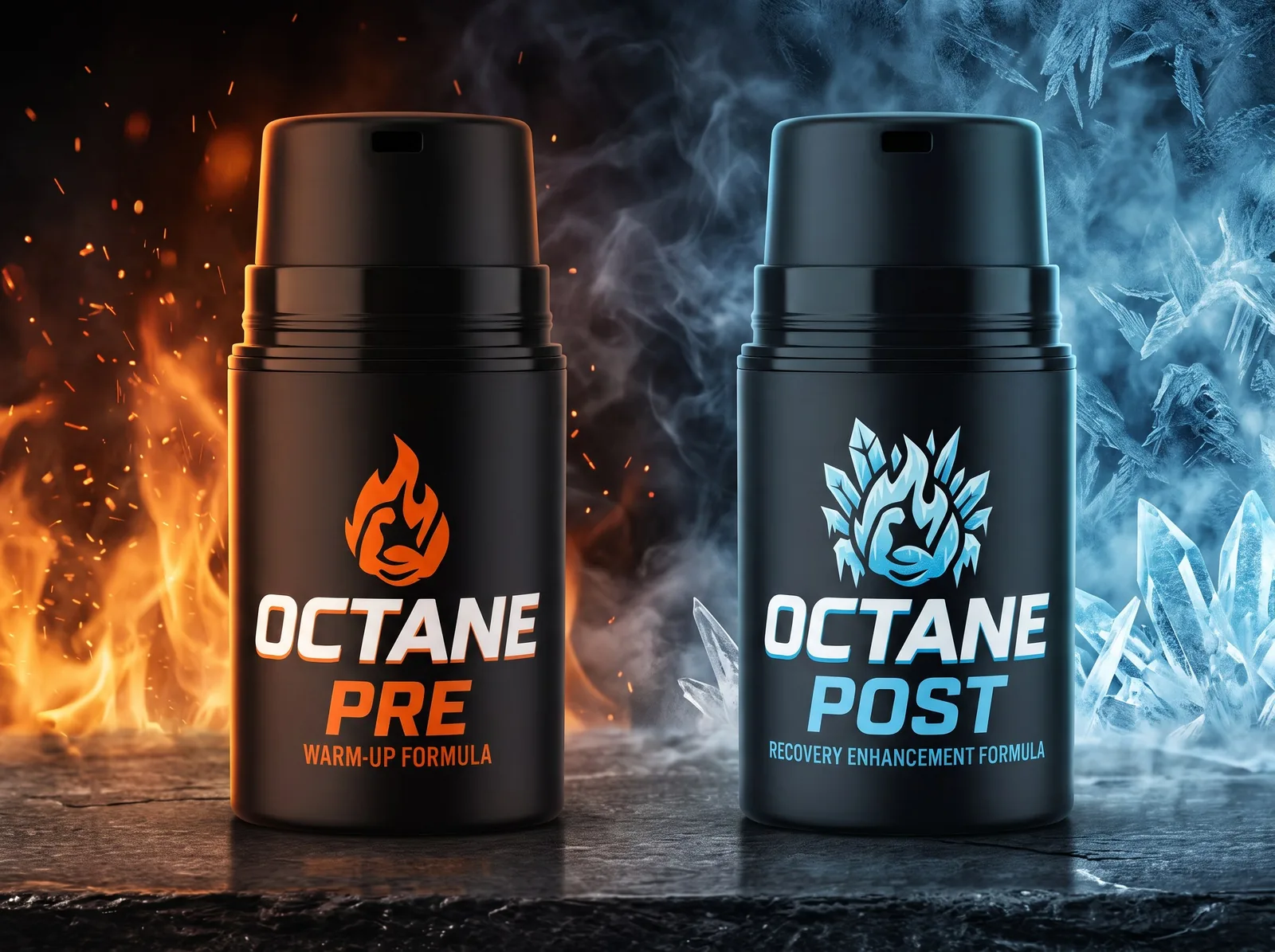
Used together, the two create a sequence: a sharp cooling rush first, then warmth that builds and lasts. OCTANE Pre is built that way on purpose. Menthol and camphor give the cooling rush in the first few minutes, a vitamin B3 flush adds visible warmth, and cayenne pepper extract resin carries the sustained heat.
OCTANE Post leaves the heat out entirely. It keeps the cooling menthol base for after training, with skin-soothing botanicals instead of capsicum.
Handling tips
Both ingredients are strong on the face and eyes, and capsaicin in particular sticks to your fingers. Wash your hands with soap and water right after applying any warming cream, and never put a heating pad or tight wrap over one.
For external use only. Cosmetic product. Patch test before first use, and stop use if irritation persists.